Wednesday, 16 March 2016

Analyse Data

Analysis
Is the film accurate?

After reading the four books and analysing the online articles and then cross referencing them with the film I can begin to get a clearer idea of whether this film is accurate or not in its portrayal of the ship and its sinking. 

From a first viewing it can be seen that the facts correlate to the film which can largely be attributed not only to the great amount of research that went into this film but James Cameron (director, writer and producer of the films) personal obsession and love for the ship. The film took several years to plan as well as many more to shoot and the intense attention to detail by Cameron suggests to me this film will be highly accurate.

The only factor weighing down on this judgement is the fact that it was made by Hollywood, although they may care for accuracy they care more for money and would have wanted to make sure this film was a crowd pleasing and a cinematic triumph that looked visually stunning. Therefore they may have forced Cameron to change details of the film, affecting its accuracy, merely because they wanted to ensure the film was appealing to audiences and not too absorbed in historical facts and figures.

Having watched the film it does appear in whole that Cameron stuck religiously to the facts and took pride in creating a film as close to the truth as possible, in my essay I will go into further details about specific scenes as well as general facts about the boat and the people on it.

Saturday, 12 March 2016

Watching the film

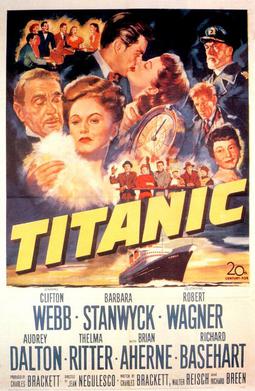
Titanic
1997


Last night I set aside 3 hours to re-watch the 1997 classic film Titanic, making notes throughout about the film about certain characters, settings, events and dialogue I can now compare it with facts I have collected about the sinking and start to gauge a real idea as to how accurate this film is.

Wednesday, 9 March 2016

Credibility of sources

Sources
usefulness?

Books
1) W.Owen, Headlines, 2010, Weldon Owen pty ltd, Australia (secondary source) 
- Weldon Owen creates high-quality illustrated children's non-fiction and family reference books for the international co-edition market. It is part of the Bonnier Publishing Ltd.
- Founded in 1984, Weldon Owen has sold over 80 million books, in over 40 countries and in more than 25 languages. For thirty years it has been one of the leading players in the international co-edition market and is valued by its publishing partners for its uncompromising quality and excellence in editorial and design.

Although this book provides clear information it is brief, condensed and aimed at much younger audiences meaning facts a could be overlooked and only interesting statistics included to entertain audiences better. Therefore anything I learn from this book may not be as useful as I can't trust that the information is valid as it may be twisted to construct a much more dramatic sequence of events then actually occurred.

2) E.Marsh, James Cameron's Titanic, 2012, Harper Collins Publishers, New York (secondary source)
With a greater insight into the film this book us useful as its highly accurate, with facts and figures about the film taken directly from the planning notes and James Cameron himself (the man behind the film). This helps educate me more about the film and spot the things I may have missed and provide background information on scenes, costumes, settings and characters I may have not noticed when watching the film. Due to its high accuracy its very useful to use in my essay.

3) B.Riffenburgh, The story of Titanic, 2011, Sevenoaks, London (contains primary sources)
As a historian from the university of Cambridge he has an impressive background for his knowledge but as he focuses on such a wide variety of historical events its hard to judge the accuracy of the book. His books have been critically acclaimed though suggesting he is someone who understands the topics he writes about and therefore the content could be useful as I can trust the author.

4) M.Swift, Titanic the memorabilia collection, 2012, Igloo books ltd, Northampton (contains primary sources)
I could find very little information about this author suggesting he doesn't have the greatest credibility and therefore any information I find from his books may not be useful as I can't assure the book is accurate.

Online
1) http://www.history.com/topics/titanic (secondary source)
This website had great historical content and is rich in facts, as a reliable site I can trust the content is therefore accurate and useful.

2) http://www.eyewitnesstohistory.com/titanic.htm (primary source)
As an eyewitness account from the time it can be presumed to be accurate as it's a primary source but the persons memory or judgement may affect its credibility meaning I cant trust it as much.

3) http://www.telegraph.co.uk/travel/lists/Titanic-40-fascinating-facts/ (secondary source)
Lots of useful facts published in a credible newspaper meaning they are likely to be accurate making the source useful.

Monday, 7 March 2016

Collecting Info (websites)

Information
websites

In this modern age another easy way to collect a large range of information is through articles online, history websites are particularly useful but as with any information collected the purpose of the source must be examined to determine its usefulness. Never the less I can use online articles and websites to gather more facts and statistics.

1) http://www.history.com/topics/titanic
This article provides great depths of detail about the creation and sinking of the ship as well as many pictures and a few videos that help build a better picture of Titanic and what happened the night it sank.

2) http://www.eyewitnesstohistory.com/titanic.htm
This article is different in the sense it is an eye witness report, this could be more useful as it gives us the sinking of the ship from a persons point of view who was there, just like what the film attempts to do. On the other hand this could be less useful as shock and memory could affect their judgement when retelling this story.

3) http://www.telegraph.co.uk/travel/lists/Titanic-40-fascinating-facts/
Again this is slightly different but rather because it lays out the facts without fancy words surrounding them, its helpful in providing me with clear facts that I can cross reference with the film but also has a lot of unnecessary information that although is interesting isn't relevant to the time frame of the film as it focuses more on the ships creation. 


Thursday, 3 March 2016

Collecting information (books)

Information 
books

First of all I will retrieve information from books which I can then cross reference with the film at a later date, as one of the most interesting events of the 20th century the sinking of Titanic in 1912 is something I have a personal interest in and therefore have several books that I can use to gather facts.

1) W.Owen, Headlines, 2010, Weldon Owen pty ltd, Australia  
This book is slightly more broad than the others as it focuses on 6 other major historical events from the 20th century but it should still be helpful in providing me with more knowledge on the sinking of the Titanic. 

2) E.Marsh, James Cameron's Titanic, 2012, Harper Collins Publishers, New York
 This is the most specific book of all of my research facilities, it focuses exclusively on the film and should help provide information about details of the film itself that I can compare with other historical textbooks.

3) B.Riffenburgh, The story of Titanic, 2011, Sevenoaks, London
This book gives many specifics of the ship from its construction to its voyage to its ultimate demise, the authors collaboration with many other historians helps improves its usefulness. This will be helpful to understand the more technical side of the ships sinking and correlate it to what is portrayed in the film and assess its accuracy.

4) M.Swift, Titanic the memorabilia collection, 2012, Igloo books ltd, Northampton
This books focuses much more on the peoples side of the story, the notable passengers on board the ship, the crew as well as mentioning the construction, and focuses on the voyage itself and the specifics of the sinking.

By using all four of these books I have many different aspects of the Titanic covered, from the facts and statistics behind its construction to the peoples side of the sinking and more in depth knowledge of the film itself. Using all these books should help provide me with an array of facts which I can then use to judge the accuracy of the film.

Monday, 29 February 2016

Essay plan

Introduction: outline what my essay is on, introduce James Cameron and the film Titanic, discuss some of the findings online, what other people think, what you're going to look at to come to your decision of whether it is or not accurate.

Paragraph 1: small things that are wrong with the film, get them over and done with, affect the accuracy of the film? maybe slightly

Paragraph 2: focus on the fictional characters/love story - added to entice audiences, does that mean we can be more accurate with the sinking as we have something interesting to watch or does it simply lead to inaccuracies as Cameron gets too carried away with the Hollywood side of things?

Paragraph 3: reference to specific scenes which are supposedly accurate, back up with facts and figures

Paragraph 4: talk about the accuracy of the ship itself, tie in how Cameron has a passion for the Titanic and spent many years researching it

Conclusion: conclude whether the small inaccuracies are important, the ship is accurate are the characters? does Hollywood twist the story too much? can we trust what we see on the screen? does Cameron present it accurately?

By sticking to this rough draft I should be able to cover all the factors I want to in this essay in a organised, structured fashion and know what I need to write about in each section. I can organise my research so I can easily access it for each paragraph that I need it for.

Thursday, 25 February 2016

Historians view - do they think its accurate?


As I research into the historical event and watch the film for myself I am curious as to what other people have found about the films accuracy. Having read many articles online the general consensus seems to be that the films is largely accurate in the way the ship is physically presented and how it sank but the characters themselves lack historical accuracy. 

There are many articles online that point out the more specific, tiny faults with the movie like the fact when talking to Rose Jack mentions a man made lake that has not been created yet (Lake Wissotta made in 1917). There are many of these small faults which decrease its accuracy but that is more to do with the time period the film is set in and the lack of research about it rather than the actual disaster itself.

The larger, more important faults are to do with characters, many are misrepresented or tweaked for dramatic effect and therefore affect the accuracy of the film. In my essay I will probably focus on this as well as mentioning specific scenes which are accurate or not within the film, this way I can focus on the film as a whole as well as individual scenes in it.

Monday, 22 February 2016

Titanic (1997) background info


Release date: 19 December 1997 (re-release 14th April 2012)
Budget: $200,000,000
Opening Weekend: $28, 638, 131 (USA)
Gross: $658,672, 302
Production Company: Twentieth Century Fox, Paramount Pictures
Runtime: 194 minutes
Rating: PG 13
Cast: Leonardo Dicaprio (Jack), Kate Winslet (Rose), Billy Zane (Cal), Kathy Bates (Molly)
Tagline: Nothing on earth could come between them

Synopsis84 years later, a 101-year-old woman named Rose DeWitt Bukater tells the story to her granddaughter Lizzy Calvert, Brock Lovett, Lewis Bodine, Bobby Buell and Anatoly Mikailavich on the Keldysh about her life set in April 10th 1912, on a ship called Titanic when young Rose boards the departing ship with the upper-class passengers and her mother, Ruth DeWitt Bukater, and her fiancé, Caledon Hockley. Meanwhile, a drifter and artist named Jack Dawson and his best friend Fabrizio De Rossi win third-class tickets to the ship in a game. And she explains the whole story from departure until the death of Titanic on its first and last voyage April 15th, 1912 at 2:20 in the morning.


Critical Reception:
Titanic garnered mainly positive reviews from film critics, and was positively reviewed by audiences and scholars, who commented on the film's cultural, historical and political impacts. It holds an overall 88% approval rating on review aggregator website Rotten Tomatoes, based on 178 reviews, with a rating average of 8 out of 10. The site's consensus reads: "A mostly unqualified triumph for Cameron, who offers a dizzying blend of spectacular visuals and old-fashioned melodrama." At Metacritic, which assigns a weighted mean rating out of 0–100 reviews from film critics, the film has a rating score of 74 based on 34 reviews, classified as a generally favorably reviewed film

Friday, 19 February 2016

Cameron and Titanic


Cameron began a massive undertaking with his story Titanic, a movie about star-crossed lovers (played by Leonardo DiCaprio and Kate Winslet) trapped aboard the doomed Titanic ocean liner. To re-create one of the greatest disasters at sea in history, Cameron had a special studio built in Mexico, which featured a 17-million-gallon water tank and 775-foot replica of the Titanic.
The film cost nearly $200 million to make and was plagued with problems and delays, and many in the industry expected the film to tank just like its namesake. But Cameron proved the skeptics wrong. Opening in December 1997, the film received critical raves and strong ticket sales. Titanic eventually became the first film to earn more than $1 billion and landed 14 Academy Award nominations. For his work on the film, Cameron took home three Oscars—for Best Director, Best Film Editing and Best Picture. In 1999, he divorced Linda Hamilton, and in 2000 he married actress Suzy Amis, who appeared in Titanic.
Continuing to be fascinated by the Titanic story, Cameron worked with his brother, Mike, to create new technology to film the undersea wreck of the infamous vessel. The result was the 3-D IMAX documentary Ghosts of the Abyss (2003). Two more documentaries followed in 2005: Volcanoes of the Deep and Aliens of the Deep.

Wednesday, 17 February 2016

Background research

Director
James Cameron


James Cameron is a critically acclaimed film director known for some of the biggest box-office hits of all time. A science-fiction fan as a child, he went on to produce and direct films including The Terminator, Aliens and Avatar. He has received numerous Academy Awards and nominations for his often large-scale, expensive productions. His most noted work, 1997's Titanic, became the first film to earn more than $1 billion and landed 14 Academy Award nominations. Cameron took home three Oscars himself for the project: Best Director, Best Film Editing and Best Picture.


Early Career
James Cameron was born on August 16, 1954, in Kapuskasing, Ontario, Canada. A science-fiction fan as a child, he grew up to become one of the most visionary filmmakers in Hollywood. He initially pursued physics as a student at California State University, Fullerton, but he left to follow his cinematic dreams. Working as a truck driver, Cameron would pull off the road to work on screenplays.

Major Films
In 1978, Cameron made his first film, a science-fiction short called Xenogenesis. The film helped him get a job with New World Pictures, a company run by famed B-movie director Roger Corman. At New World, Cameron worked in number of different roles, from art director on Battle Beyond the Stars (1980) to director on Piranha II: The Spawning (1981).
Cameron's fortunes took a major upturn in 1984, when he wrote and directed The Terminator (1984). The movie told the gripping science-fiction tale of a robot from the future (played by Arnold Schwarzenegger) who travels to the present day to hunt down the leader of the resistance in a yet-to-occur battle between humans and machines. The film became a critical and commercial hit and helped Cameron land his next project, the sequel to Ridley Scott's Alien (1979), which featured Sigourney Weaver as a female action hero in space. Aliens (1986) received several Academy Award nominations, including one for Weaver for Best Actress.
With The Abyss (1989), however, Cameron experienced a number of disappointments. The shoot for the film was grueling. Much of it was filmed in a huge underwater set, which took its toll on the cast and crew. After its release, critics and moviegoers were not impressed with the story of scuba divers who encounter aliens while recovering a U.S. Navy submarine. However, the film's visual effects were stunning and earned an Academy Award.
Working with his third wife, Kathryn Bigelow, Cameron helped produce her 1991 action flick, Point Break (1991). The couple's two-year relationship ended around the same time. But Cameron returned to form that year with another box-office hit, Terminator 2: Judgment Day. The film earned more than $200 million and broke new ground with its impressive visual effects. Several years later he later he would marry one of the film's stars, Linda Hamilton.

Monday, 15 February 2016

Research - which books/media

Over the next few weeks I will now research into Titanic and collect tables of information about its creation, the time era the film is set in (early 1900's), how the boat sank and individual inspections into any characters in the film who are based on real people.

To conduct this research I will look in many places:
- online websites which contain facts
- books
- documentaries
- newspaper articles

Some websites that may be useful are:
historylearningsite.co.uk
bbchistory.co.uk
historychannel.com
titanicfacts.net
encyclopedia-titanic.com

Some books that may be useful are:
- the story of Titanic
- Titanic stories
- days that changed the world

Some useful documentaries found on Youtube that I could look at are:
- Titanic the real story
- Titanic the unsinkable giant that sank
- Titanic 100 years on
- Ultimate Titanic
- The unsinkable Titanic

Some useful newspapers could be:
- Telegraph
- Daily mail

As such a major tragedy from the 20th century there are many many sources of information around and so I will have lots of places to look for information but also lots of information to sort through to be able to find a concise set of facts to help me analyse the historical accuracy of the film.

Sunday, 14 February 2016

Developing a title - final

After researching and picking which historical event, which director and which film I can now finalise my question so I know what to focus on when researching. My question I will research is:

How accurately does James Cameron portray the historical event of Titanic's sinking in his 1997 film?

Friday, 12 February 2016

Which Titanic films? Or just one?

The next question which I have to answer is do I focus on several films that are about Titanic or do I just focus on one?

Advantages of focusing on just one:
- more detailed analysis
- more focus on the director
- better evaluation as I only have one film to relate too (less confusing)

Advantages of focusing on more than one film:
- more general view
- more to talk about
- can cross reference films, talk about time differences


After looking at several different Titanic films I think it would be better if I focused on one film rather than several different ones. I have chosen the 1997 version as its the most famous and therefore brings in the debate of whether things are over-dramatised for dramatic effect and so make the film more interesting to audiences. It is also the version that James Cameron directed so I will be able to talk about his role in the creation and direction of this film.

Thursday, 11 February 2016

Which Director?

To make my question more complex and interesting I have chosen to include an aspect about directors - this is something which I know fairly little about but as I hope to go and study Film next year at university I feel it's a good idea to put this in as part of my question and start learning about it now. Depending which film/s I chose depends which director I research but seeming as I have picked Titanic as my historical event I will focus my research onto directors of Titanic films.

My top 3 are:

Photo of Roy Ward Baker.jpg
James Cameron                                        Jerry Jameson                                     Roy Ward Baker

Although all these directors have vast film histories I have chosen to go with James Cameron as he is the most recent and has the information readily available about him. Also if I choose to just focus on the 1997 film about Titanic I will still be able to include the part about him and wont have to cut anything like I may have to do if I research the other two directors but don't end up analysing their films. Therefore I will focus on researching just James Cameron.

Tuesday, 9 February 2016

Evaluative meeting with teacher

After choosing which topic to base my investigation on and coming up with a draft of a question when I met with my Teacher we were able to discuss what I would actually produce as my end piece. The two main options were making a film or writing an essay, editing something without shooting my own footage is something harder that I will probably attempt over the summer. Having ruled out editing I was left with the two choices. 

Although it was argued that making a film could be better as it shows use of technology I've struggled to think of anything to make it about that could relate to history and Titanic and wonder how to incorporate a research aspect into it. Therefore I have decided to do an essay which I feel is the best way to present a detailed argument for my question. 

We discussed timings and realised to get this finished soon I will need to start researching as soon as possible which is something I intend to act upon.

Friday, 5 February 2016

Update

After finally choosing which historical event my question can now be changed from:

- How accurately do writers/directors portray historical events in film/tv?

To:

- How accurate do writers/directors portray Titanic in Film?

I chose not to do TV as although there would have been lots of footage to analyse in actual fact I feel there may have been too much therefore by choosing film I can make my investigation more precise and accurate than too broad and diluted.

I chose Titanic as I have a great interest in the historical event and there was the same issue with WWI and WWII as there was with TV - it is very broad and could have been too much to focus on. This way I can keep my research concise and to the point.

The last thing I have to decide is what Director to choose - James Cameron may be a good idea seeming that he is the director of the globally famous film Titanic (1997). In a separate post I will look at this and decide

Monday, 1 February 2016

Titanic?

Which historical event
Titanic


Titanic is by far my favourite historical event and the one which I find most interesting and would love to research, there are many films I could analyse (most infamously the 1997 James Cameron one) and hundreds of documents, articles about the event online.

Unlike the other three this event is very specific, focusing on one evening/night in April 1912 and so would lead to a far ore focused essay with much more in depth, rich detail about the event and so may be easier to link back to the films to rate their accuracy. 

Although the other three are incredible interesting periods they are also quite broad and I worry this will make my essay too confusing and hard to structure therefore picking Titanic, a single one night event, means my essay will hopefully be of a much higher standard as the research can be more specific and the final product can be better crafted.

Monday, 25 January 2016

Holocaust?

Which historical event
Holocaust


This time a more precise historical event that the previous two I have looked at, the holocaust could be a great topic to research as, like WWI and WWII, it is so interesting. Also there is lots of papers/articles/documentaries about it online that I could use to research. 

As it's a more condensed event then the world wars it may be easier to talk about but it still spans a large period of time meaning it may be hard to talk about how accurate a film is in depicting the event. This is definitely a good historical event to research and am therefore quite likely to use it in my question, I will evaluate my last event, Titanic, and then decide.

Monday, 18 January 2016

WW2?

Which historical event
WWII

nazi

Similarily to WWI, WWII is a period in the 20th century which I find incredibly interesting, especially as it involves Hitler and his attempt to increase his power to a global level which is something fascinating to study.

As a topic it is rich in detail and is amazing to hear about, even to this day and so to conduct and investigation into it would be very interesting. Having said that thought WWII is quite a broad topic (5 years) and so condensing all the information may be hard therefore although I would thoroughly enjoy researching about WWII I may look at other historical events before choosing which one to include as part of my question.

Monday, 11 January 2016

WW1?

Which Historical event
WWI


For my question so far I have decided that I will investigate the accuracy of historical events in film, after some evaluation I realised doing one historical event will be better as I only have 5000 words maximum to write about it. Therefore I must choose between several different historical time periods/events and decide which one I want to investigate the accuracy of.

World war one (1914 - 1918) is a period in the 20th century which I find incredibly interesting, from the assassination of the Archduke Ferdinand to the armistice signed by Germany on 11th November and all that occurred in between - as the first world war there were so many advancements, so many new things learnt and so many untold stories. 

As a topic it is rich in detail and is amazing to hear about, even to this day and so to conduct and investigation into it would be very interesting. Having said that thought WWI is quite a broad topic (4 years) and so condensing all the information may be hard therefore although I would thoroughly enjoy researching about WWI I may look at other historical events before choosing which one to include as part of my question,

Monday, 4 January 2016

Which Historical event?

EPQ
Which historical event?


After narrowing down the perimeters of my question the next thing to decide is what historical event/s to research and investigate for my question. There are many historical events I'm interested in so will evaluate each one individually and then choose which ones I want for my question, the different events so far are:

- WWI
- WWII
- Titanic
- Holocaust

However after doing some initial background research I have realised it will be better to pick just one, although it limits my research materials as I only have one event to look at it means my essay can be more focused and better structured. Therefore my decision when picking an event needs to be more precise as I can only pick one event, rather than 2 or 3 as originally thought.